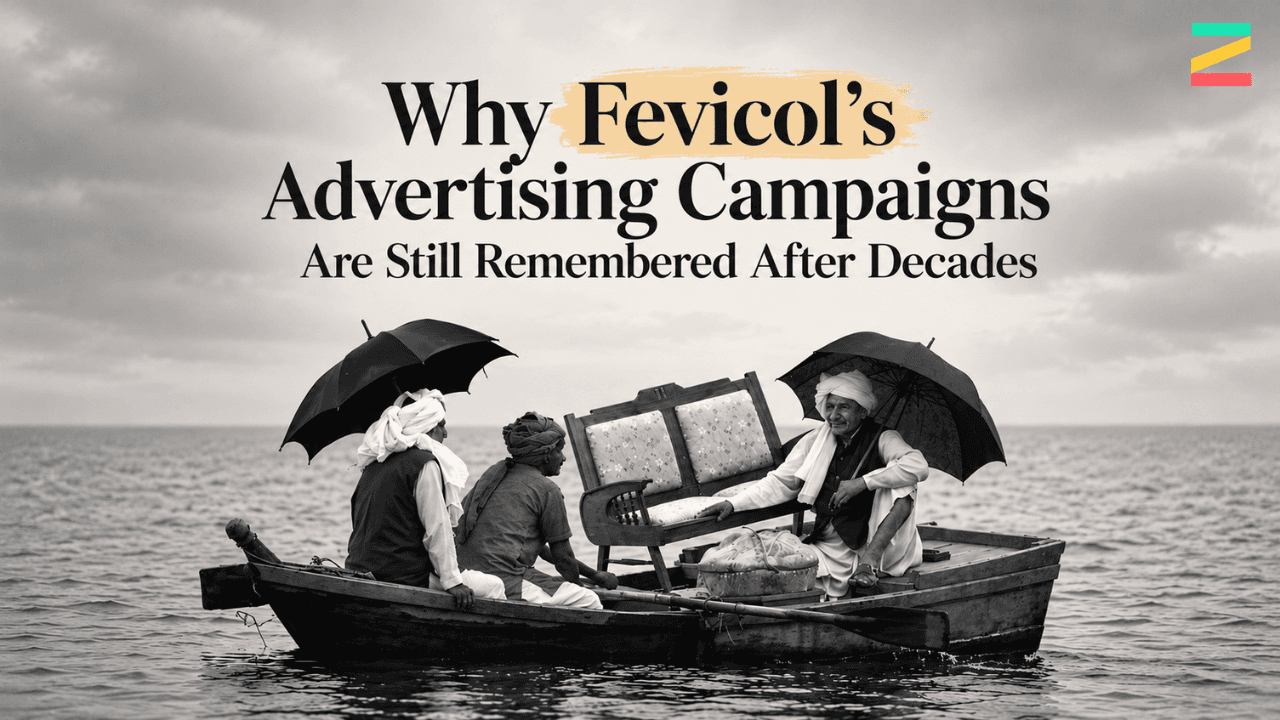
Some advertisements disappear from people's minds within days. Others become so memorable that people continue talking about them years after they first appear.
Fevicol is one of the strongest examples of memorable advertising in India.
Think about its famous overcrowded bus advertisement or the sofa that travels through generations of a family. These advertisements are entertaining, but their real strength lies in how effectively they communicate one simple idea: Fevicol creates strong, lasting bonds.
For decades, Fevicol has used humour, exaggeration, cultural references, and emotional storytelling to build a distinctive brand identity. Instead of constantly promoting product features, its advertisements create situations that help consumers understand and remember the product's core benefit.
But why do these campaigns remain memorable when thousands of other advertisements are forgotten?
The answer lies in branding psychology, creative consistency, and Fevicol's understanding of Indian consumer behaviour.
How Fevicol Built a Strong Brand Identity Through Advertising
Fevicol, introduced by Pidilite Industries in 1959, operates in a category where purchasing decisions are often driven by functionality. Consumers expect an adhesive to provide strength, reliability, and durability.
However, communicating these qualities through conventional advertising can be challenging. Simply showing someone applying glue to furniture does not necessarily create an interesting or memorable advertisement.
Fevicol approached the challenge differently.
The brand transformed its functional benefit into a recognizable advertising idea: a bond so strong that separating things becomes almost impossible.
This idea became the foundation of numerous creative campaigns. Although the situations, characters, and storytelling techniques changed over time, the central message remained consistent.
This is an important principle of brand positioning. When consumers repeatedly encounter a distinctive message connected to the same brand, they are more likely to remember that association.
4 Fevicol Advertising Campaigns That Demonstrate Powerful Branding Psychology
1. Fevicol Bus Campaign: How Humour Creates Lasting Brand Recall

One of Fevicol's most recognizable advertisements features an overcrowded Indian bus travelling along a rough road. Passengers are packed tightly inside and on top of the vehicle, yet they somehow remain firmly together despite the movement.
The advertisement uses an exaggerated situation to communicate the strength of Fevicol's adhesive.
Instead of directly explaining product performance, the brand allows viewers to understand its promise through humour.
The psychology behind the campaign
The advertisement combines three powerful elements: familiarity, exaggeration, and surprise.
The crowded bus is a familiar visual in Indian culture. This makes the setting immediately recognizable to many viewers. The unexpected stability of the passengers creates a humorous contrast between what audiences expect and what actually happens.
That contrast makes the advertisement entertaining while reinforcing the idea of a strong bond.
The most important detail is that the humour is not separate from the product message. The joke itself communicates Fevicol's positioning.
Marketing lesson: A funny advertisement becomes more effective when the humour helps consumers remember the brand rather than just the joke.
2. Fevicol Cauliflower Campaign: The Power of Unexpected Visual Storytelling

Fevicol's cauliflower-themed print advertising is an example of how a familiar everyday object can be used to communicate a product benefit creatively.
The concept uses visual exaggeration to reinforce the idea of strong adhesion. Rather than depending on lengthy explanations, the advertisement encourages viewers to notice an unusual situation and connect it with the brand's central promise.
This type of advertising is especially interesting because it demonstrates how a simple visual can communicate a message without complicated storytelling.
The psychology behind the campaign
Consumers encounter numerous advertisements every day. Familiar advertising formats can become easy to ignore, especially when they repeatedly use similar product demonstrations and promotional messages.
An unexpected visual creates a moment of curiosity. Viewers may spend additional time trying to understand why an ordinary object is being presented in an unusual way.
This process can encourage deeper engagement with the advertisement.
However, curiosity alone does not guarantee effective branding. The unusual visual must ultimately connect with the product or brand.
Fevicol's creative approach illustrates how visual surprise can support a consistent brand message.
Marketing lesson: Creativity should make the product benefit easier to understand, not more difficult to recognize.
Publishing note: The exact cauliflower advertisement should be verified against the original creative before adding specific scene details or a campaign date.
3. Fevicol's 60-Year Sofa Campaign: How Emotional Storytelling Builds Brand Connections

In 2019, Fevicol celebrated its 60th anniversary with an advertisement centred on a sofa that survives through different generations of a family.
The story follows the sofa as it moves through changing households, circumstances, and lifestyles. While the people and surroundings change, the sofa remains intact.
This advertisement takes a different approach from Fevicol's humour-driven campaigns.
Instead of presenting a single exaggerated situation, it uses a longer narrative to connect the product's durability with the emotional meaning of family relationships.
The psychology behind the campaign
Objects often become associated with personal experiences and memories. A piece of furniture may remind someone of their childhood, family gatherings, or the home in which they grew up.
Fevicol uses this emotional connection to communicate durability in a more meaningful way.
The sofa is not simply furniture that remains strong. It becomes a symbol of continuity across generations.
The advertisement also demonstrates how a brand can communicate an emotional message without abandoning its functional positioning.
Fevicol's core promise remains strength and lasting adhesion. The campaign simply connects that promise with a human experience.
Marketing lesson: Emotional storytelling becomes more effective when the emotion naturally relates to the product's actual benefit.
4. Fevicol's Forever Bond Theme: How Consistency Creates Brand Recognition

One of Fevicol's greatest branding achievements is its ability to communicate the concept of lasting bonds through different situations.
The brand's familiar messaging around strong connections has appeared across humorous advertisements, product demonstrations, and emotionally driven storytelling.
Although the creative execution changes, the underlying meaning remains recognizable.
This long-term consistency is a major reason Fevicol has developed such a distinctive advertising identity.
The psychology behind the campaign theme
Consumers build brand associations through repeated exposure to recognizable messages and experiences.
When a brand consistently connects itself with a particular benefit, that association can become easier to remember.
Fevicol has repeatedly reinforced the idea of a strong bond. Over time, this allows different advertisements to contribute to the same overall brand identity rather than creating unrelated impressions.
This approach also demonstrates the importance of maintaining recognizable brand assets and messages.
Marketing lesson: Brands can experiment with creative formats while maintaining a consistent central promise.
Note: “Forever Bond” is used here to describe Fevicol's broader brand theme, not a separately verified official campaign.
Why Fevicol's Advertising Strategy Works: 5 Branding Psychology Principles
The success of Fevicol's advertising approach is not based on creativity alone. Its campaigns demonstrate several psychological principles that influence how people notice, understand, and remember brands.
1. Humour Helps Capture Attention
Humour can make advertisements more enjoyable and encourage viewers to engage with the message.
Fevicol frequently uses unexpected situations to make its advertisements entertaining. Because the humour is closely related to the product's strength, it also reinforces the brand's positioning.
2. Familiar Situations Create Cultural Connections
Many Fevicol advertisements use familiar Indian settings, characters, and everyday experiences.
These cultural references help audiences understand the creative idea quickly and can make the communication feel more relatable.
3. Repetition Strengthens Brand Associations
Fevicol has consistently communicated the idea of strong bonding.
Although individual campaigns vary, repeated exposure to the same central benefit helps establish a recognizable brand identity.
4. Emotional Storytelling Makes Functional Benefits Meaningful
The sofa campaign demonstrates how durability can be connected with memories, relationships, and continuity.
This allows the brand to communicate beyond technical product performance while remaining relevant to its category.
5. Simple Messages Are Easier to Understand
Fevicol rarely needs complicated explanations to communicate its core advertising message.
The situations may be unusual, but the underlying idea remains simple: things joined with Fevicol stay together.
That clarity makes the campaigns accessible to a broad audience.
What Modern Brands Can Learn From Fevicol's Advertising Campaigns
Fevicol's advertising history provides valuable lessons for businesses developing branding and marketing strategies.
Fevicol's strategy | What businesses can learn |
Humour connected to product benefits | Make entertainment relevant to the brand |
Familiar cultural situations | Understand the audience's everyday experiences |
Consistent brand positioning | Reinforce recognizable associations |
Emotional storytelling | Connect product benefits with human experiences |
Creative visual communication | Keep the central message simple |
Long-term campaign consistency | Build brand recognition beyond individual advertisements |
One common mistake businesses make is treating every marketing campaign as an independent activity.
They introduce new messages, change their visual identity, and experiment with different positioning without considering what customers should consistently remember.
Fevicol demonstrates a different approach.
The brand can introduce fresh creative ideas because it has a clear understanding of what those ideas must communicate.
Why Memorable Advertising Matters More Than Going Viral
Today, many businesses measure campaign success through views, impressions, likes, and shares.
These metrics can provide useful information about campaign reach and engagement. However, they do not automatically indicate whether consumers remember the brand or understand its value.
An advertisement may attract millions of views because it is entertaining, but if viewers cannot identify the advertiser, its contribution to brand recognition may be limited.
Fevicol's advertising offers an important lesson: attention is valuable, but recognizable brand associations are essential for long-term brand building.
For businesses, the objective should not simply be to create advertisements that people watch. It should be to create communication that helps people remember the brand and what it stands for.
Conclusion: Great Advertising Creates Memories, Strong Branding Creates Associations
Fevicol's advertising campaigns remain memorable because they consistently combine creative storytelling with a clear brand promise.
Whether it is the humour of an overcrowded bus, the curiosity created by unusual visual advertising, or the emotional journey of a sofa across generations, the central idea remains connected to strength and lasting bonds.
The broader lesson is that memorable branding requires more than attractive visuals or clever advertisements. It requires an understanding of consumer psychology, cultural context, brand positioning, and consistent communication.
At Ztrategize, we believe powerful marketing campaigns begin with understanding how consumers think, feel, and remember brands. Through psychological branding, creative strategy, and meaningful storytelling, businesses can develop campaigns that build recognition beyond short-term attention.
The question every business should consider is simple: Will customers remember your advertisement, or will they remember your brand?


